

The Core Concept — Quick market snapshot
shoe storage is moving from a simple utility purchase to a multifunctional furniture category driven by smaller homes and higher footwear ownership.
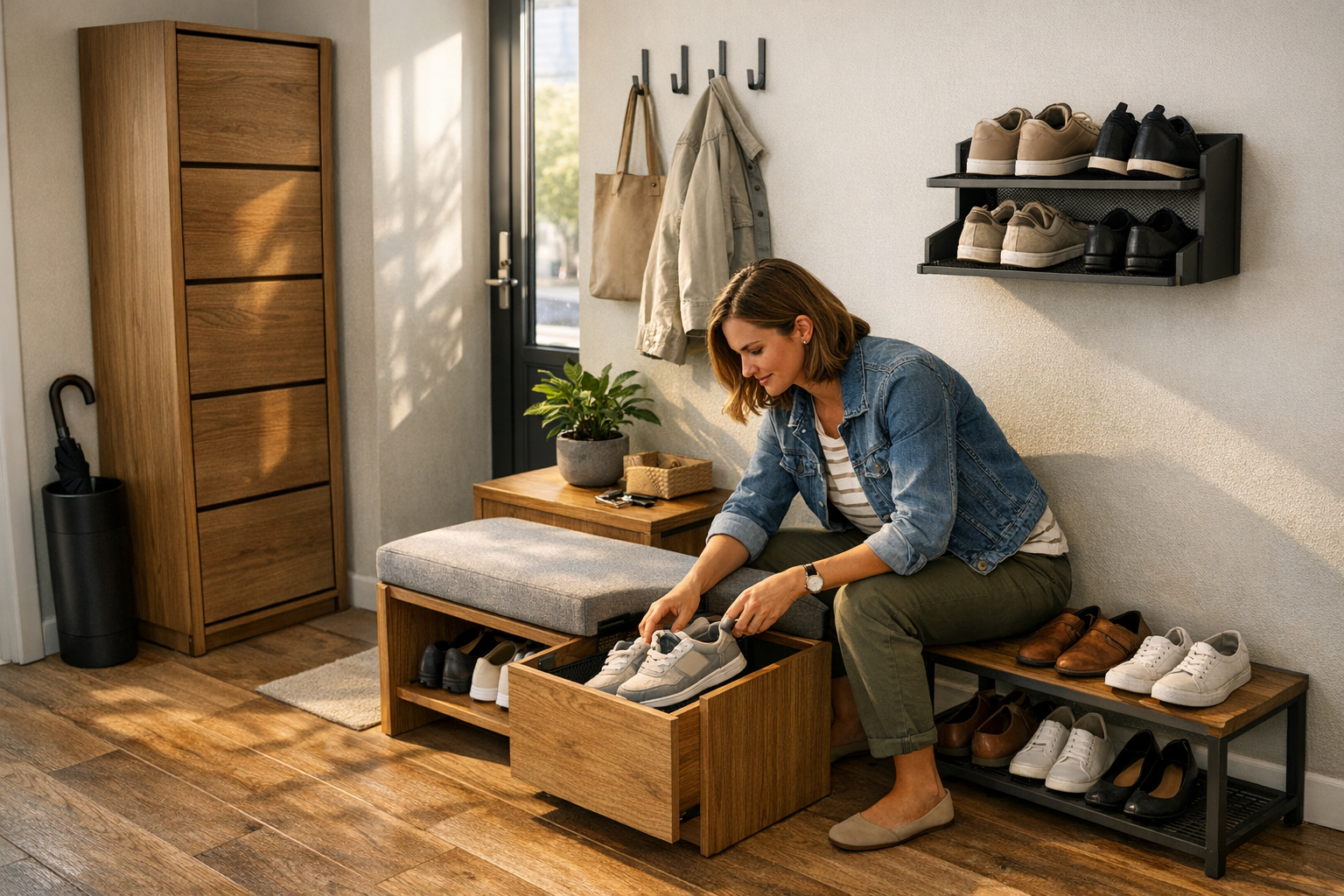
Quick facts to keep in mind when you write or shop. The narrow shoe rack market is roughly USD 2.5 billion in 2024 while broader shoe storage and organizer categories can reach USD 10.8 billion by 2025. Growth sits around 5.5 percent to 7 percent CAGR from 2024 through 2026. These figures explain why retailers should list clear specifications and highlight multifunctional designs like benches with storage and slim shoe cabinets with seating.
Why this matters to Sarah the urban apartment dweller. Densifying cities and higher online furniture adoption mean shoppers expect compact, high performing units with clear dimensions and capacity numbers immediately on the product page.
Sources include market studies from Market.us and broader forecasts from DataIntelo.
Key Takeaways
- Demand is rising for compact and multifunctional pieces that include clear specs on dimensions capacity and assembly.
- Open racks still lead market share but closed multifunctional cabinets and benches are growing quickly.
- Product pages that provide technical specs assembly times and visual measurement tools reduce returns and increase purchase confidence.
Step by Step Guide — Buying checklist and comparison
This step by step section turns market context into a short buying process that Sarah can use to select the right product fast.
Step 1 Gather constraints. Record available footprint height depth and desired functions seating or console surface. If space is under two meters wide prioritize slim cabinets or vertical benches.
Step 2 Choose format by priority. Use the short format guide below to pick candidate formats. Then apply the specification checklist in Step 4 to compare models.
Open racks
Pros include low cost light weight and easy access. Open shoe racks hold the largest market share at 37.9 percent. Cons include dust exposure and poor aesthetic for busy entryways. Best for closets or laundry areas. Ideal buyer is price sensitive and needs flexible stacking.
Shoe cabinets
Enclosed shoe storage cabinet models with two to four doors keep shoes hidden and reduce dust. These models suit entryway shoe storage and hallway shoe storage requests. Assembly can be moderate and weight higher. Ideal for buyers who want a tidy look and moderate capacity.
Benches and ottomans
Combine seating with storage. Select a shoe storage bench with internal shelves or bins if you want a tidy entryway and seating. Watch load limits and seat padding thickness. Best for buyers needing multifunctionality.
Floating units
Wall mounted floating shoe cabinets save floor space and create a clean look. Verify anchoring specifications and stud requirements before purchase. Suitable for small spaces and studios.
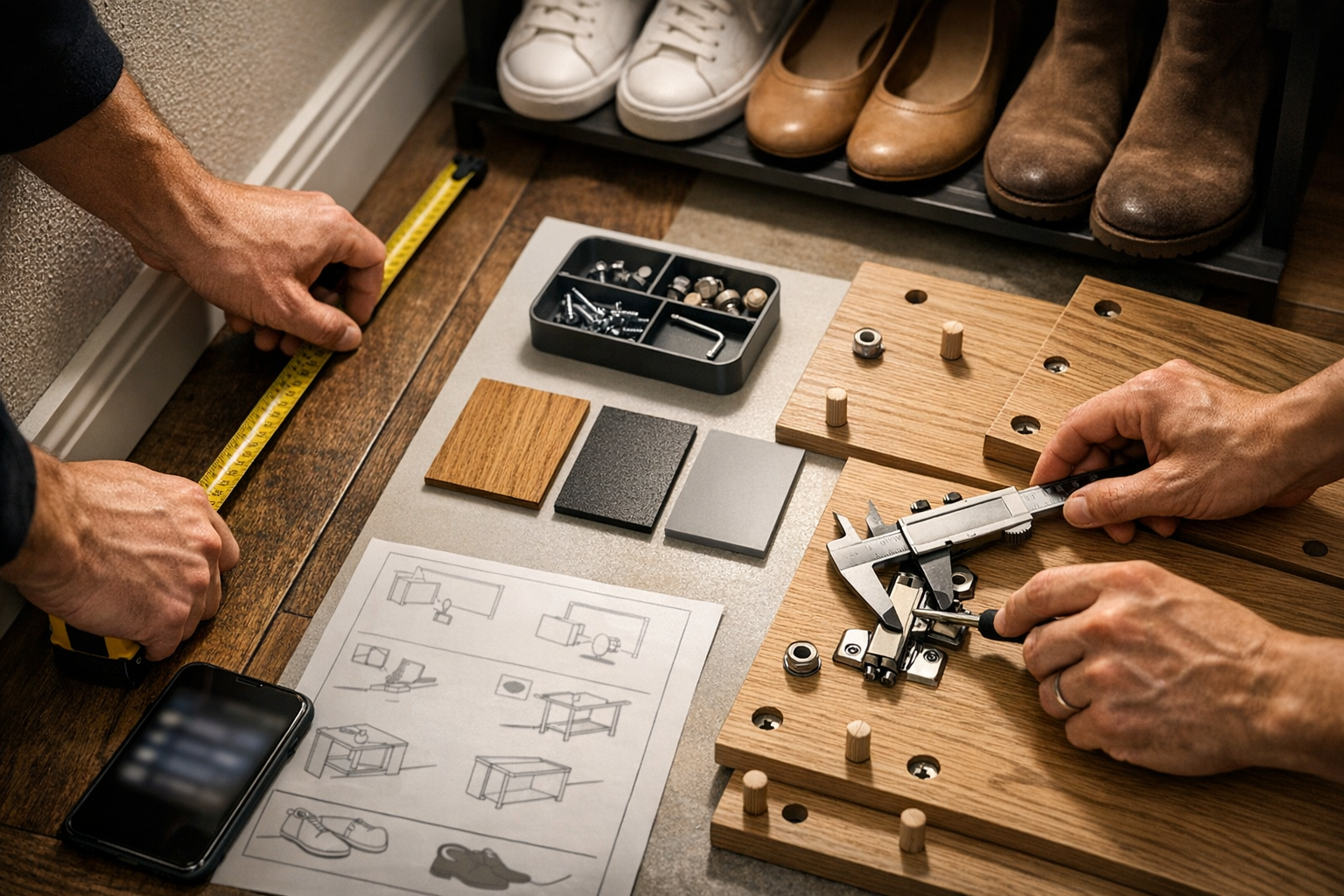
Step 3 Quick decision matrix
- Need seating and hidden storage pick a bench.
- Need maximum visible capacity pick open rack.
- Need small footprint and tidy look pick slim shoe cabinet with doors.
- Renting and cannot affix anchors pick freestanding light benches or racks.
Step 4 Specification and performance checklist for product pages
Every listing should include these fields. If a retailer cannot provide them do not recommend the product.
- External dimensions in centimeters or millimeters width depth and height.
- Internal usable seat depth and shelf clearances in centimeters.
- Shoes per shelf estimate by shoe type for womens mens sneakers and boots.
- Maximum load per shelf and total unit load in kilograms.
- Assembly time estimate and number of people required.
- Anchoring and anti tip hardware instructions and required hardware list.
- Material specification including species gauge or density finish name and VOC statements.
- Ventilation notes for enclosed cabinets and mold prevention tips.
Use internal links to help shoppers explore similar products. Example anchor links to related content include shoe cabinet with doors shoe storage bench slim shoe cabinet wooden shoe cabinet and shoe storage shelf.
Advanced Analysis and Common Pitfalls
Use the research data to call out real product and content gaps that cause returns and disappointment.
Top realistic pitfalls
- Missing or inaccurate dimensions that cause fit failures.
- Weak anchoring instructions and missing anti tip hardware.
- Under stated assembly time and required skill level.
- Low load limits on shelves especially for heavy boots.
- Poor ventilation causing odor or mold in enclosed cabinets.
- Thin materials that flex under load or damage during shipping.
| Format | Footprint vs capacity | Ease of access | Dust privacy | Ventilation | Durability | Assembly difficulty |
|---|---|---|---|---|---|---|
| Open shoe rack | Low footprint high visible capacity | Very easy | Poor | Excellent | Varies plastic to metal | Low |
| Shoe storage cabinet | Moderate footprint moderate capacity | Good but slower | Excellent | Depends on design | High for wood metal | Medium |
| Shoe storage bench | Higher footprint lower visible capacity | Good internal access | Very good | Depends on vents | Medium to high | Medium |
| Floating shoe cabinet | Small footprint limited capacity | Good | Excellent | Moderate | High if metal or solid wood | High due to wall mount |
Data based pointers. Open shoe racks hold 37.9 percent of the market while plastic shoe racks lead materials at 41.3 percent. Yet consumer preference is shifting toward enclosed cabinets and multifunctional furniture. Cite these trends when supporting product recommendations using Market.us and Cognitive Market Research.
Conclusion
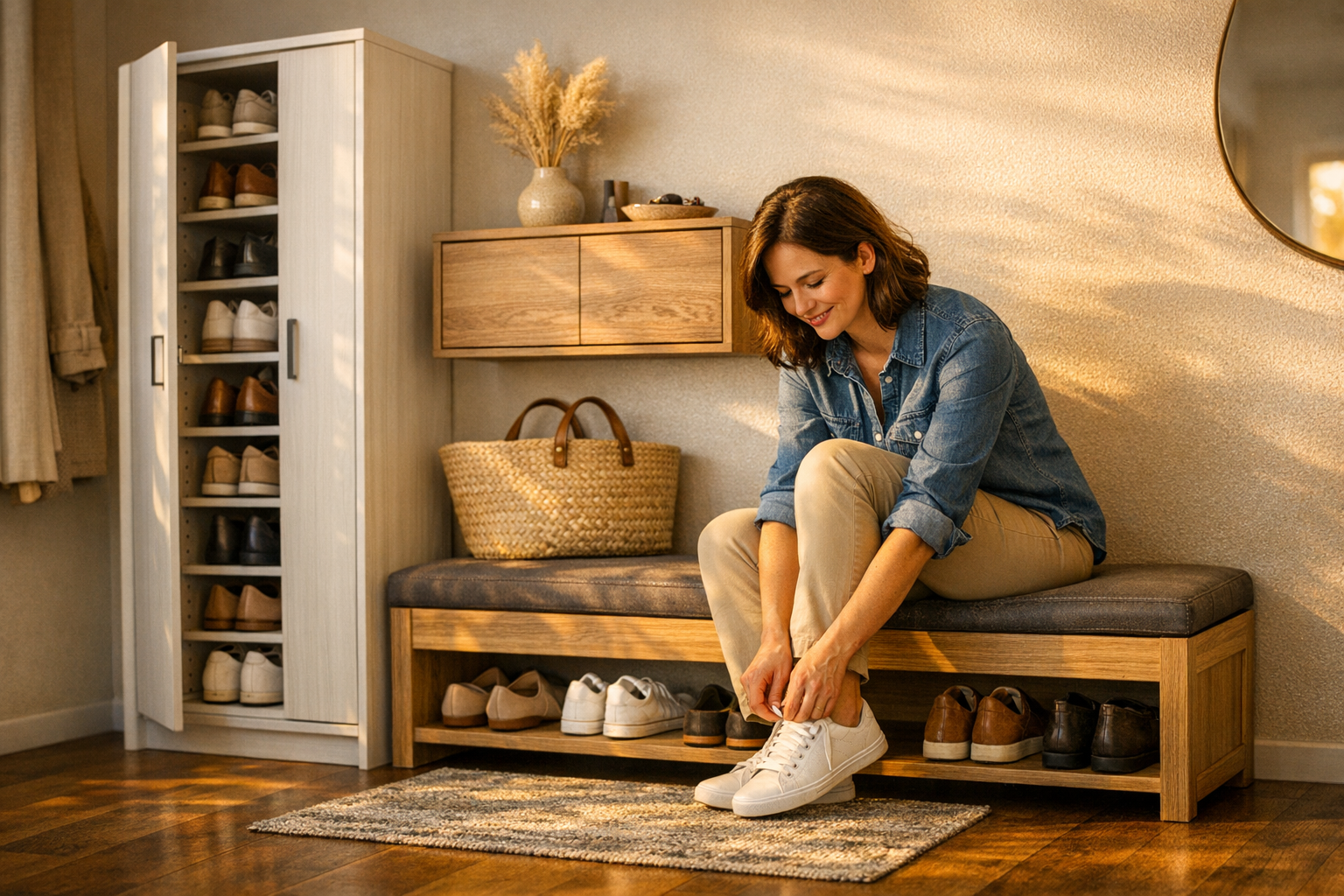
To summarize pick the format that matches your top constraint then use the specification checklist to compare models side by side. Good product pages show dimensions capacity weight limits materials assembly time and anchoring details up front.
For a fast next step pick your top constraint space budget or style and we will point you to the best category pages for entryway solutions including entryway shoe storage and hallway shoe storage.
Final note Sarah will prefer listings that show a shoes per shelf calculator clear assembly times and a visible return policy in plain language when deciding on new shoe storage purchases.
Pick your top constraint space budget or style to get matched products now.
FAQ
What are the must have specs on a shoe cabinet product page?
Include external dimensions internal usable depth shelf clearance shoes per shelf estimates load limits anchoring instructions materials and estimated assembly time.
Which format is best for a narrow apartment entryway?
Choose a slim shoe cabinet or a floating shoe cabinet to maximize vertical storage and keep the floor clear.
How do I prevent odor and mold in enclosed units?
List ventilation features use breathable liners avoid sealing wet shoes and add charcoal sachets or silica packs to reduce moisture.
How long should assembly take for a typical bench or cabinet?
Retailers should list an honest estimate. Typical DIY assembly ranges from 20 minutes for simple racks to 90 minutes for multi door cabinets. Note when two people are required.
What should I check for shipping and returns?
Confirm packaging protections corner guards and a clear missing hardware policy plus a visible return window and easy label printing to reduce friction.